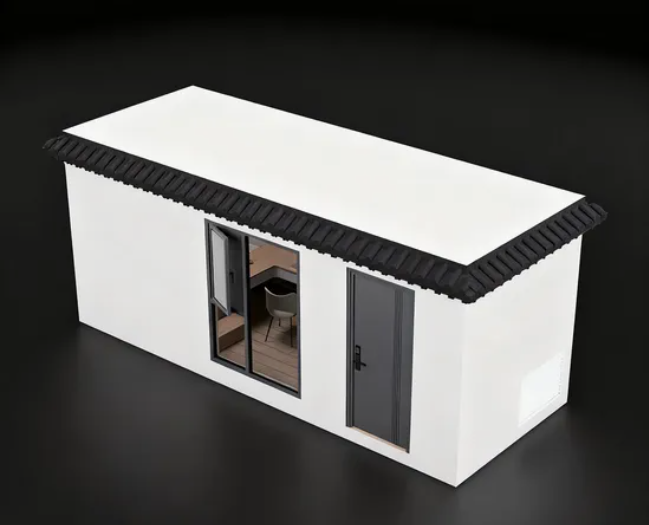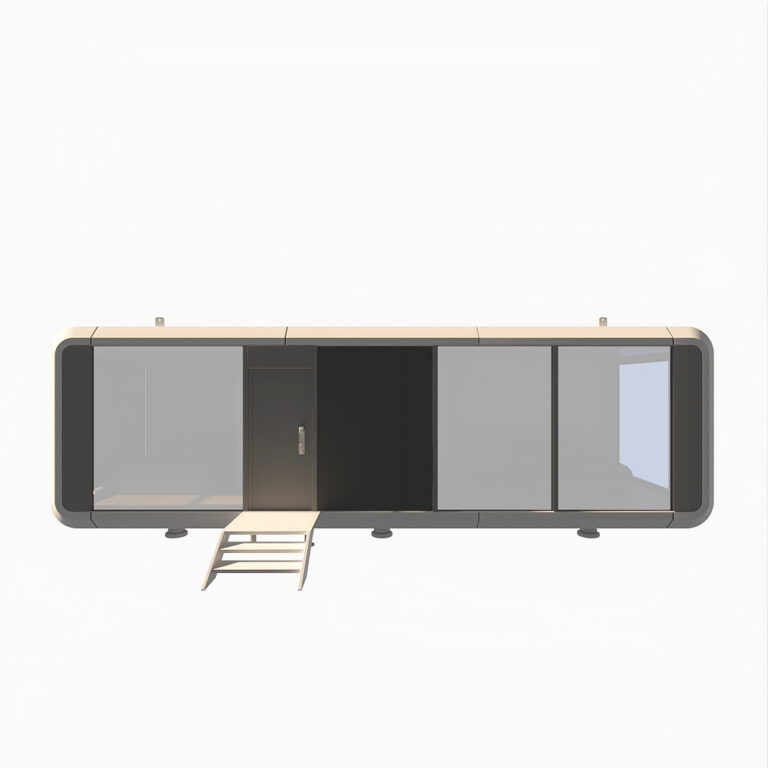

As a manufacturer deeply rooted in the modular construction industry, our company has always placed “making products lighter and transport more economical” at the core of our R&D philosophy. Through years of overseas delivery practice, we have come to realize that sea freight often eats up more profit than the product itself. That is exactly why we proactively drove a critical technological upgrade—from first‑generation integrated manufacturing to second‑generation modular assembly—and the most tangible return on this upgrade has been the substantial savings in overseas shipping costs for both our clients and ourselves.
Our First‑Generation Integrated Capsule Houses: Comfortable, but “Too Space‑Hogging”
In the early days, our capsule houses were fully prefabricated and delivered as whole units—plumbing, electrical wiring, interiors, doors and windows were all installed at the factory, and the complete room was hoisted directly onto a truck and shipped to the port.
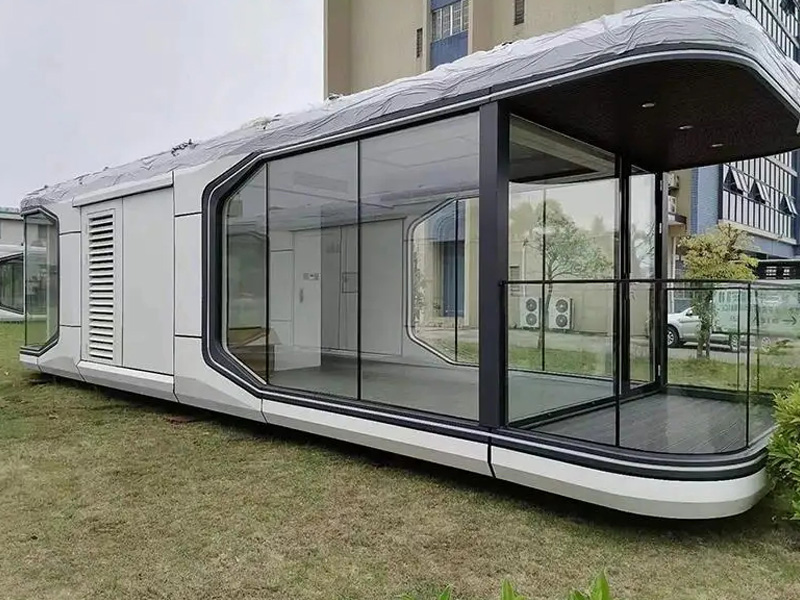
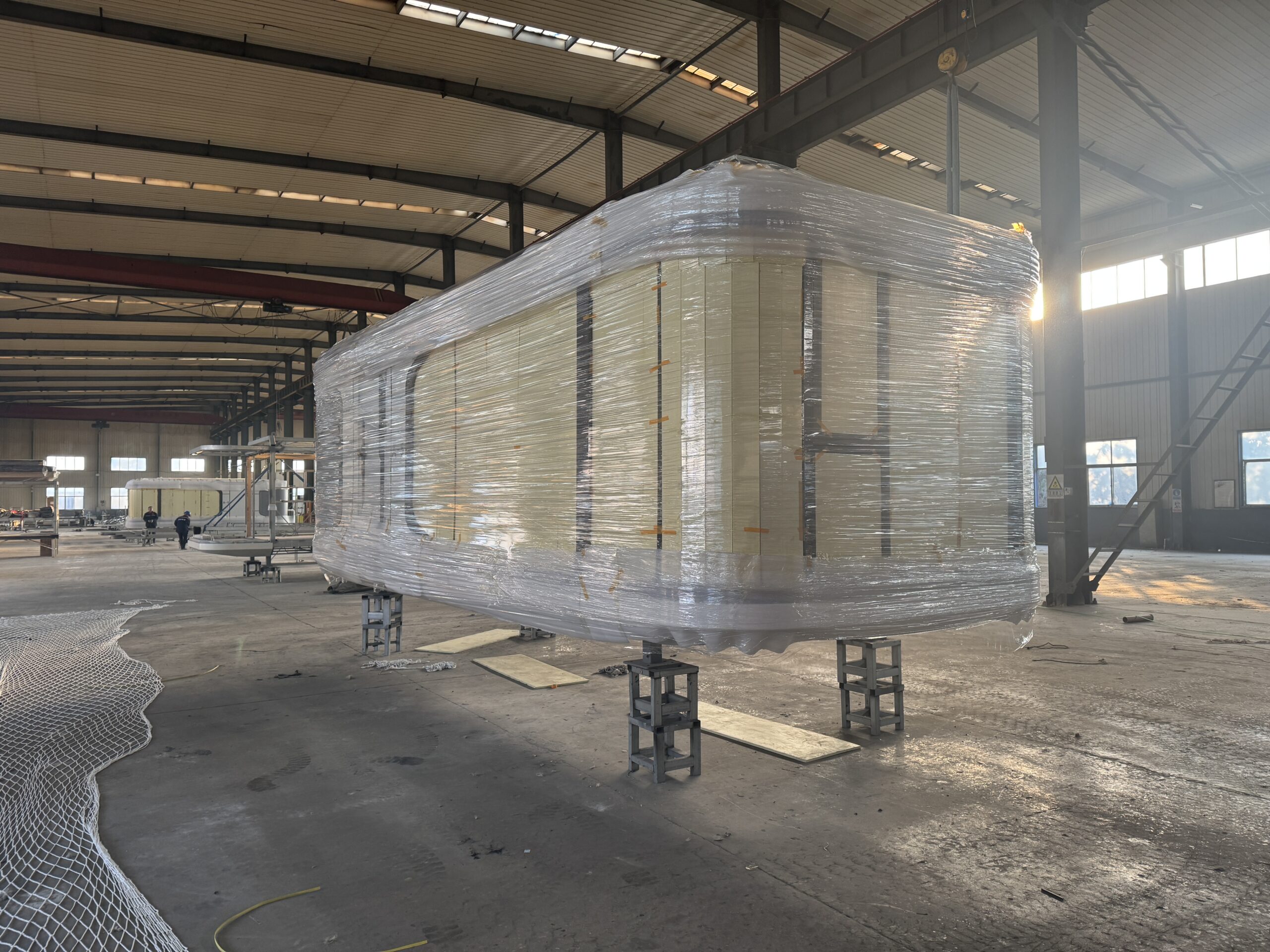
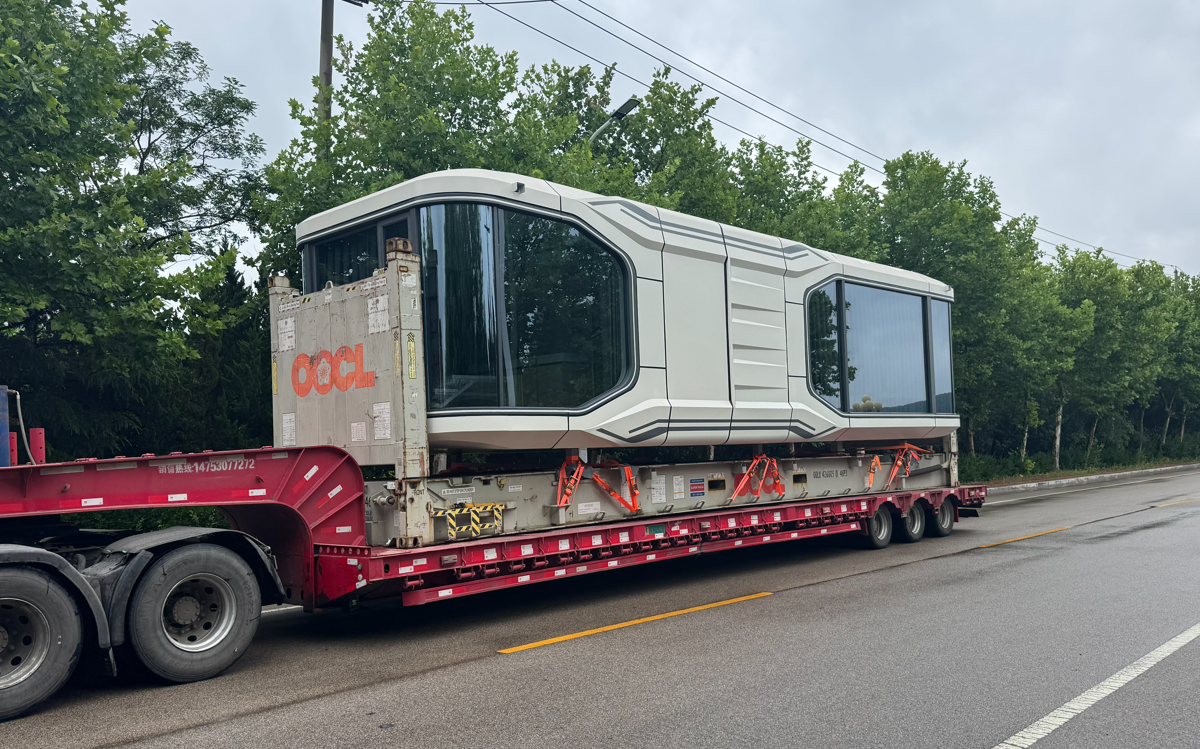
Clients loved the comfort, but our logistics team cringed every time they ran the numbers:
- Huge waste of space. A 15 m² integrated unit occupied a shipping volume of up to 45 m³, with the interior completely empty—essentially paying a premium to ship a box of air.
- Only special vessels could carry them. Oversized in height and width, they couldn’t fit into standard containers, forcing us to charter bulk carriers or open‑top containers, which doubled the freight rate and incurred extra oversized‑cargo approval fees.
- Loading and transport were full of constraints. Road bridge height limits, terminal lifting capacities, and deck space turned every shipment into a logistical obstacle course.
- Very low load per vessel. A bulk carrier could only hold a few dozen units, so the freight cost allocated to each house was painfully high—even we felt the pinch.
Back then, despite a healthy order book, a large chunk of our profits ended up in the shipping companies’ pockets.
Our Second‑Generation Modular Assembly Solution: Break the House into “Building Blocks” and Bring Freight Costs Down
Those pain points forced us to redesign the product from scratch. We asked ourselves: Why must it be shipped as a whole? Why can’t we assemble it on site?
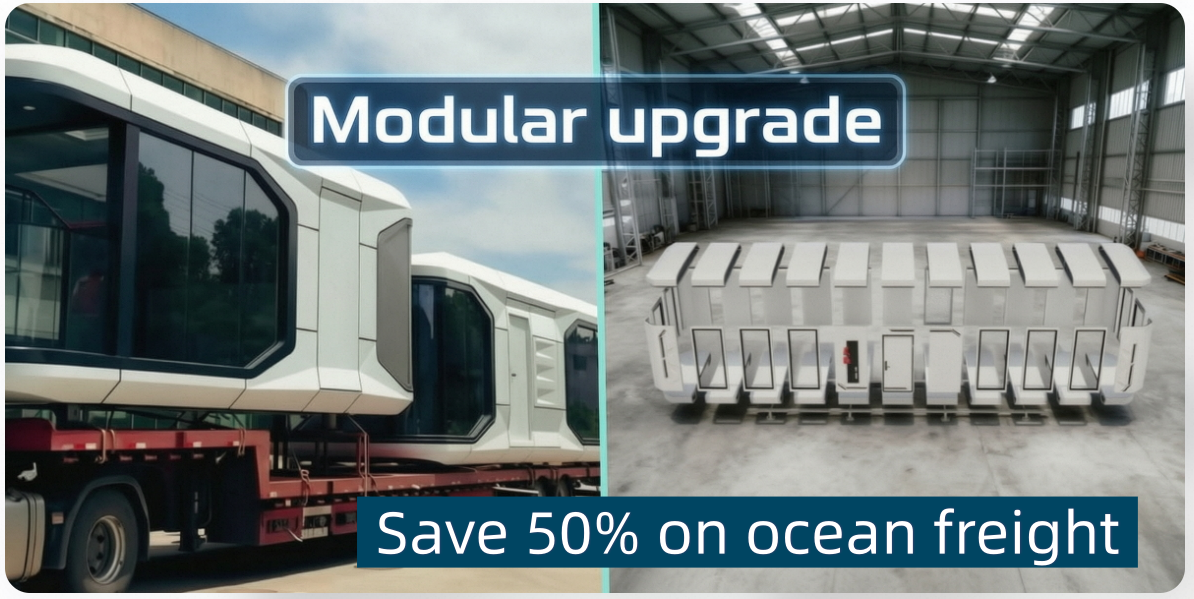
So our team spent nearly a year breaking down the integrated house into a series of standardised modules—wall panels, floor frames, roof frames, bathroom pods, and MEP (mechanical, electrical, plumbing) systems—all reverse‑engineered to fit the internal dimensions of 20‑foot and 40‑foot standard containers. Each module is flat‑packed, stackable, and fork‑liftable. At the factory, they are bundled into compact “parcels”, and a single standard high‑cube container can now hold what used to require three flatbed trucks.
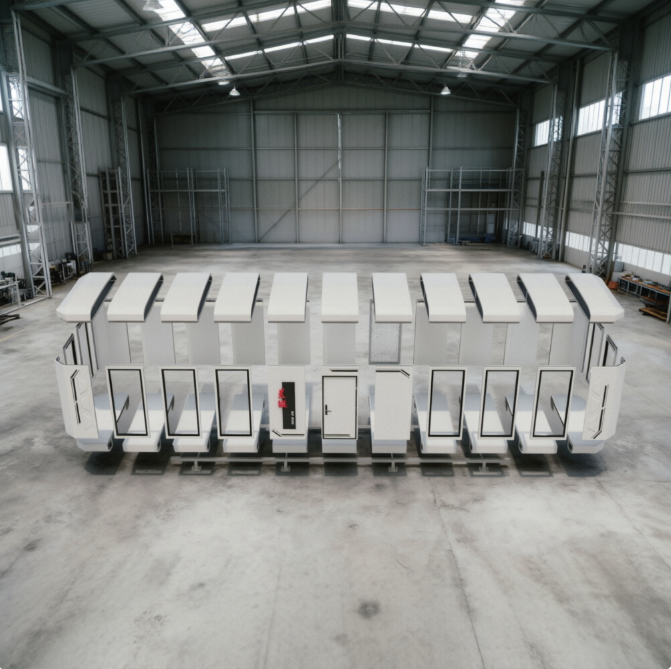
r best‑selling 15 m² single‑module capsule house as an example:
- The integrated version occupied about 45 m³, while the modular package takes only about 20 m³—a volume saving of over 55%.
- A 40‑foot high‑cube container that could previously hold only 2 integrated units can now easily fit 6 sets of modular components (including all accessories).
- Even more importantly, we can finally ship using ordinary standard containers, saying goodbye to specialised vessels and exorbitant surcharges.
Real data tells the story even more clearly:
- Our modular solution reduces the sea‑freight volume per unit by 50%–70%, leading to a 30%–50% reduction in freight costs.
- On an order shipped to Australia last year, with the same 10 containers, the first‑generation product delivered only 10 houses, while the second‑generation delivered 30. The client was amazed: “Did you just cut our freight bill in half?”
- Moreover, the modular design distributes weight more evenly, requires no extra lashing, and improves loading/unloading efficiency by 40%, while also lowering port handling costs.
On‑Site Assembly Is Not Slower Than Integrated Installation
Some clients worry: “If it’s disassembled, won’t assembly be a hassle?”
Our answer is: absolutely not. All modules are pre‑drilled, pre‑wired, and have door/window frames pre‑installed at the factory. On site, workers only need to bolt the modules together and plug in the MEP connections. A team of 4–5 people, with simple lifting equipment, can complete a standard unit within one week—even faster than integrated hoisting, because the modules are lighter and require less crane capacity and simpler foundations.
This “precision prefabrication in China + rapid assembly overseas” model benefits everyone: we save on freight, clients save on import duties (flat‑packed components sometimes qualify for lower tariff rates), and contractors save on heavy machinery rental.
This Upgrade Is Essentially a Shift in Our Mindset
In the past, we treated the “house” as the final product. Now, we treat “a house that can be efficiently shipped” as the starting point of design.
Every module’s dimensions, connector positions, stacking layers, and centre of gravity have been simulated and tested repeatedly to ensure they fit together like Lego bricks while stacking as neatly as shelf goods. More importantly, modularity offers tremendous flexibility—a client wants double the area? Just add two more modules. Want a balcony or floor‑to‑ceiling windows? Swap in the corresponding modules. Such customisation was nearly impossible with integrated designs.
Our Commitment and Outlook
Today, our second‑generation modular capsule houses have been exported in bulk to Australia, the Middle East, Southeast Asia, and various European countries, with cumulative deliveries exceeding 500 units and a client repurchase rate of over 70%. Freight costs have dropped from an initial 35% of the total cost to around 12%. Every dollar saved either becomes a price advantage we pass on to our clients or goes into upgrading interior finishes.
And we won’t stop here. Our next step is the third‑generation foldable module system, targeting a further 40% reduction in shipping volume, and we are exploring an “all‑in‑sea‑freight‑inclusive” pricing model. But we will never forget that it was the leap from “integrated” to “modular” that truly taught us how to design for maritime transport and secured our foothold in the global market.
The same container, more houses; the same freight cost, greater value. This is not just a change in technical parameters—it is our genuine promise to every overseas client. If you are also struggling with cross‑border shipping costs for capsule houses, we warmly invite you to explore our modular solutions. We would be happy to provide a clear, side‑by‑side freight comparison.